MEDICUS
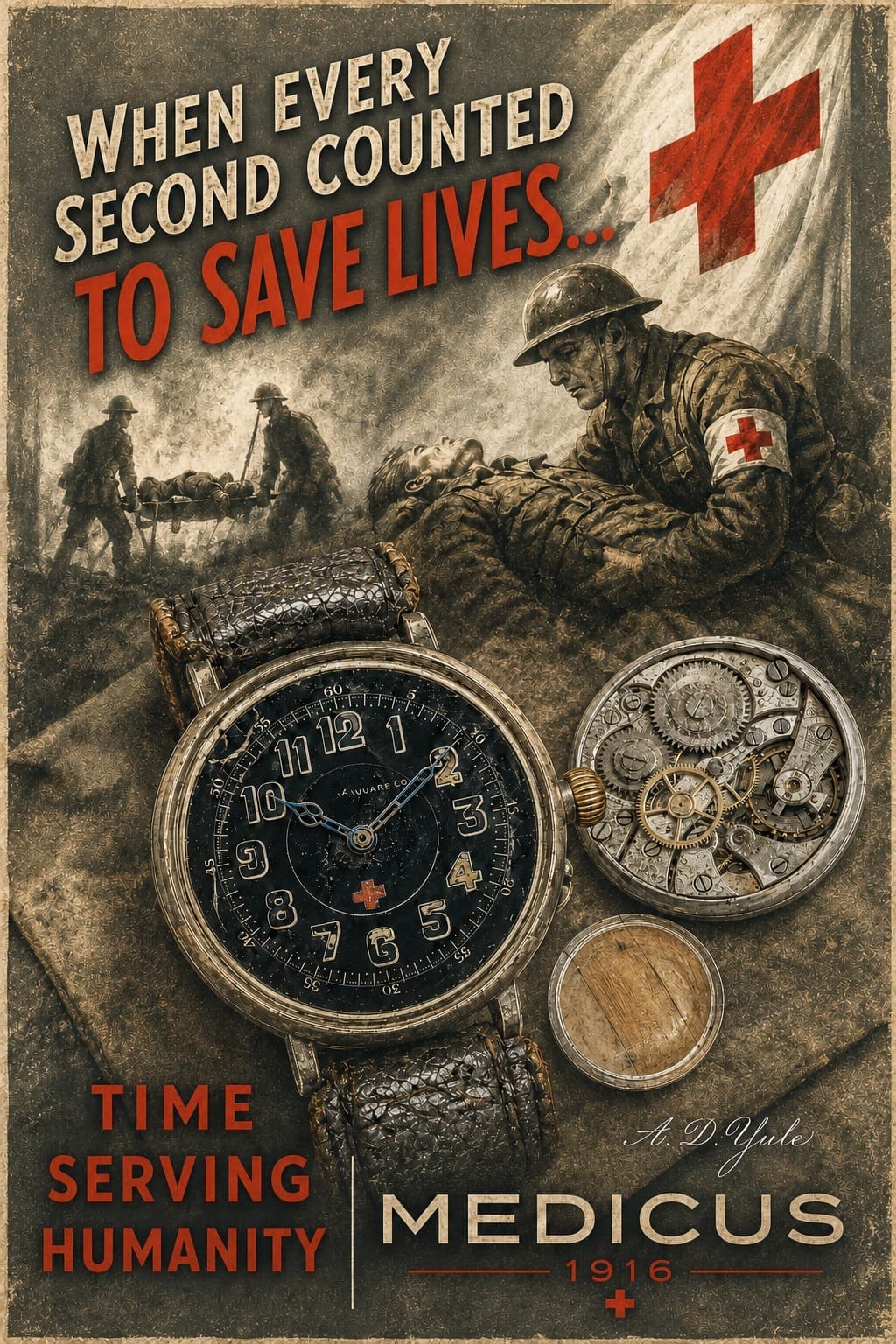
Medicus 1916 heritage poster with trench watch and wartime medical scene

A. D. Yule

MEDICUS

1916

Time serving humanity — an extremely rare WW1 medic's wristwatch, and the story of the unsung heroes who measured life one second at a time.

Cape Town · House Clearance

A Barn-Find Relic

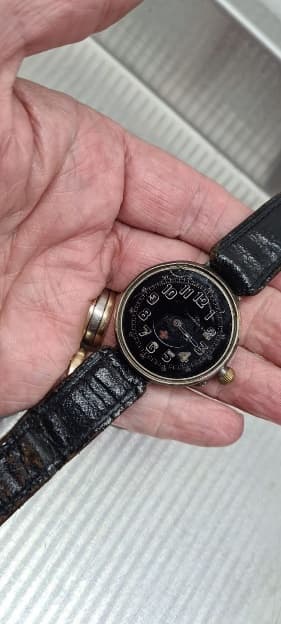
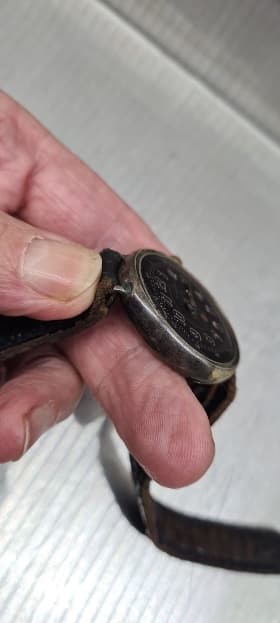
A tired, tarnished trench watch surfaced among the contents of a house clearance in Cape Town. The bezel no longer fitted its solid silver case. Pieces were taped together for posterity, then left to slowly tarnish — crystal yellowed, crown heavily worn from endless winding.

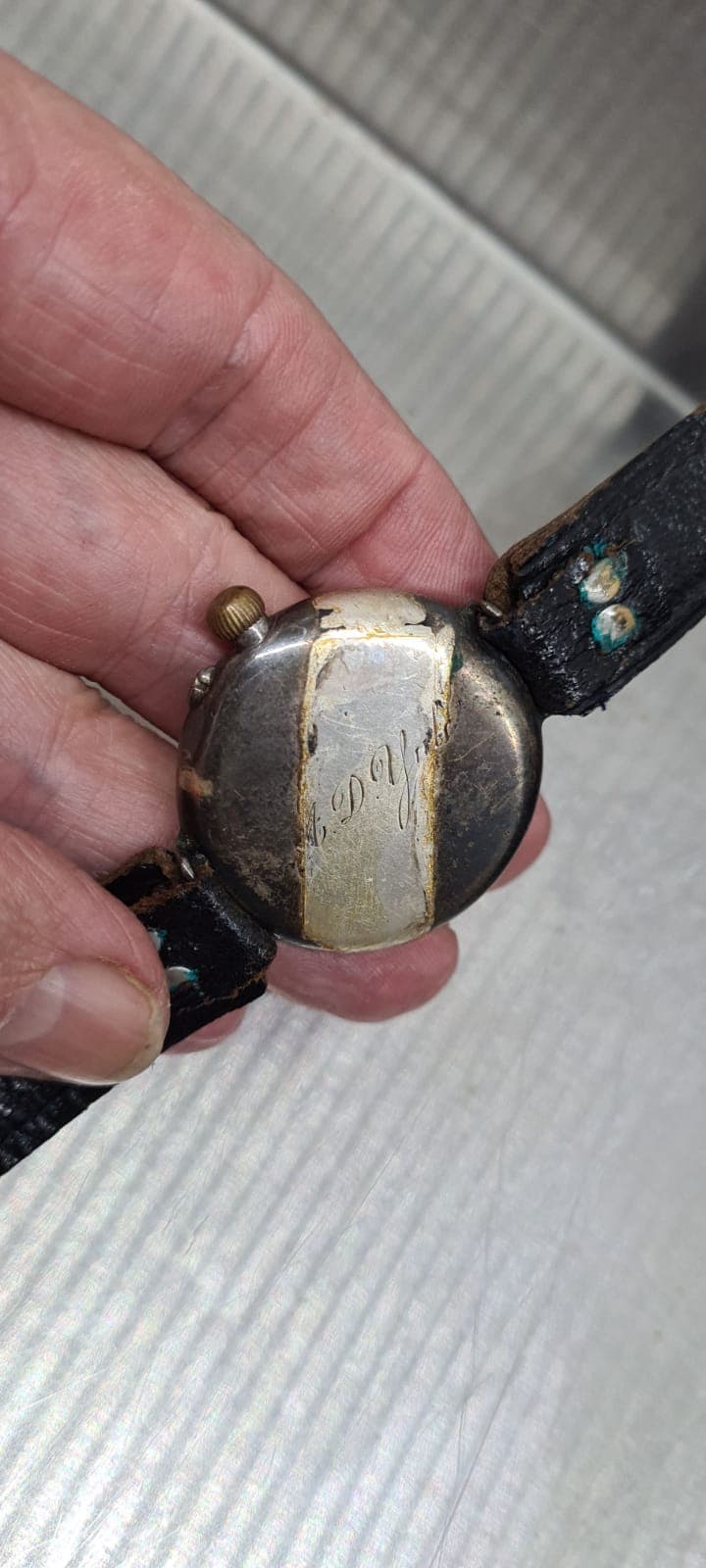
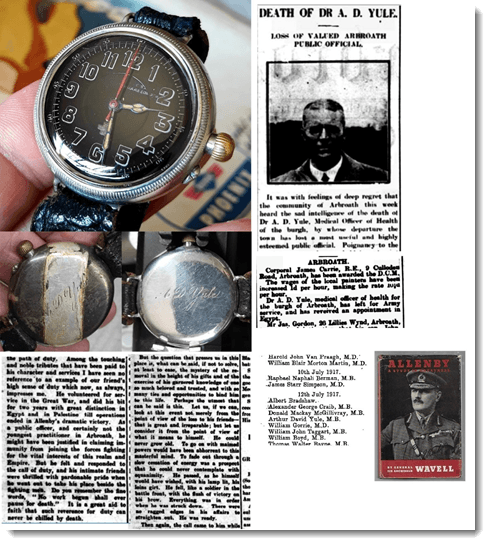
On the case back, engraved in script: A. D. Yule. A black dial. A faded Red Cross. And a centre-seconds pivot where almost no trench watch of that era should have one.

Original black-dial A. D. Yule medic watch as found, with red cross motif
Engraved case back of the watch reading A. D. Y.
Side profile of the tarnished silver Borgel case before restoration
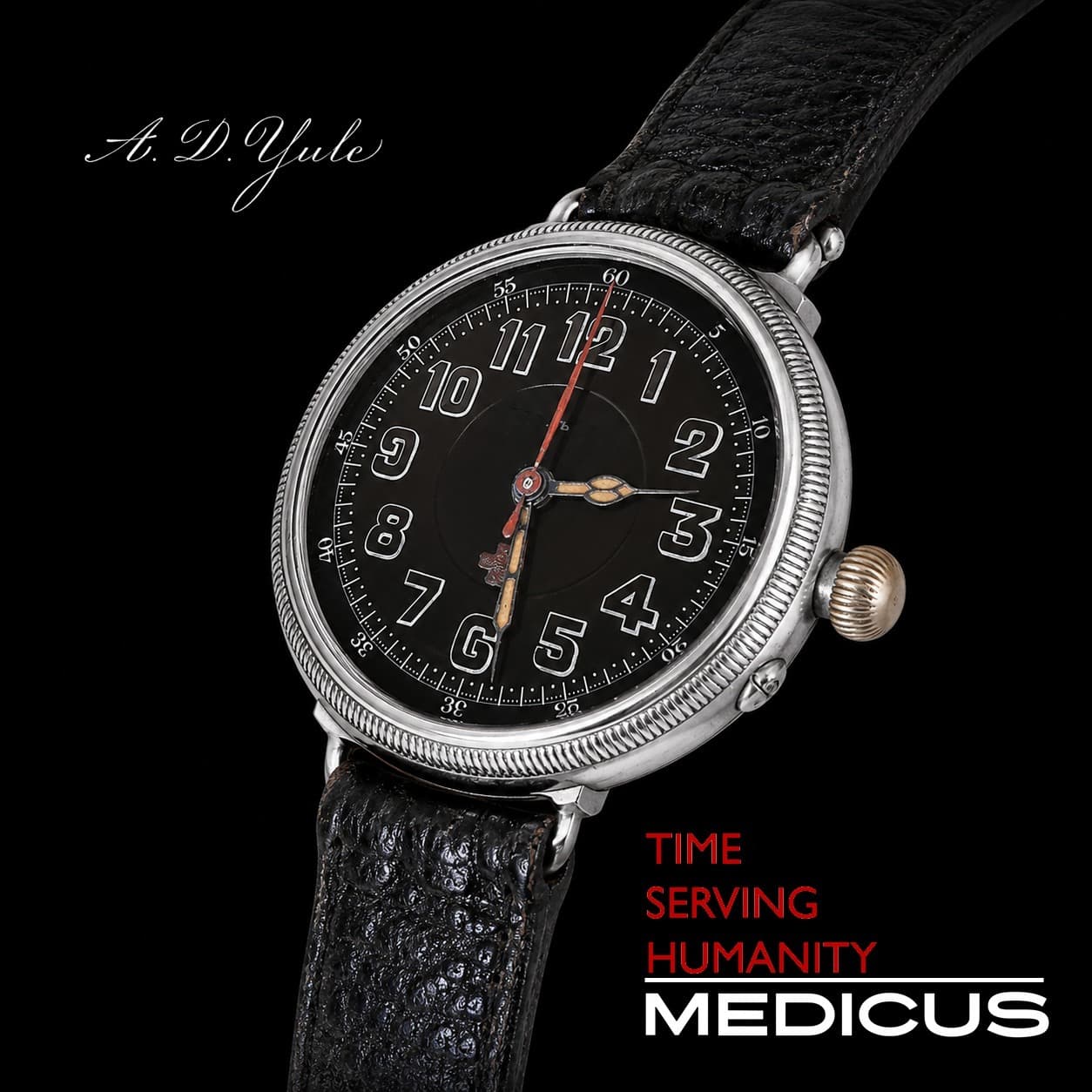
Medicus wristwatch product study — Time Serving Humanity

Not a trench watch — a medic's watch

Centre Seconds. Life Saving Detail.

Taking a pulse in WW1 was an early indicator of a patient's condition. A centre-seconds hand — pioneered by Gallet's Electa workshop around 1913 — made that measurement practical in the field. Civilian centre-seconds wristwatches would not become common until the late 1930s.

  • Gallet / Electa high-grade movement with centre seconds
  • Solid silver Borgel dust- and damp-proof case
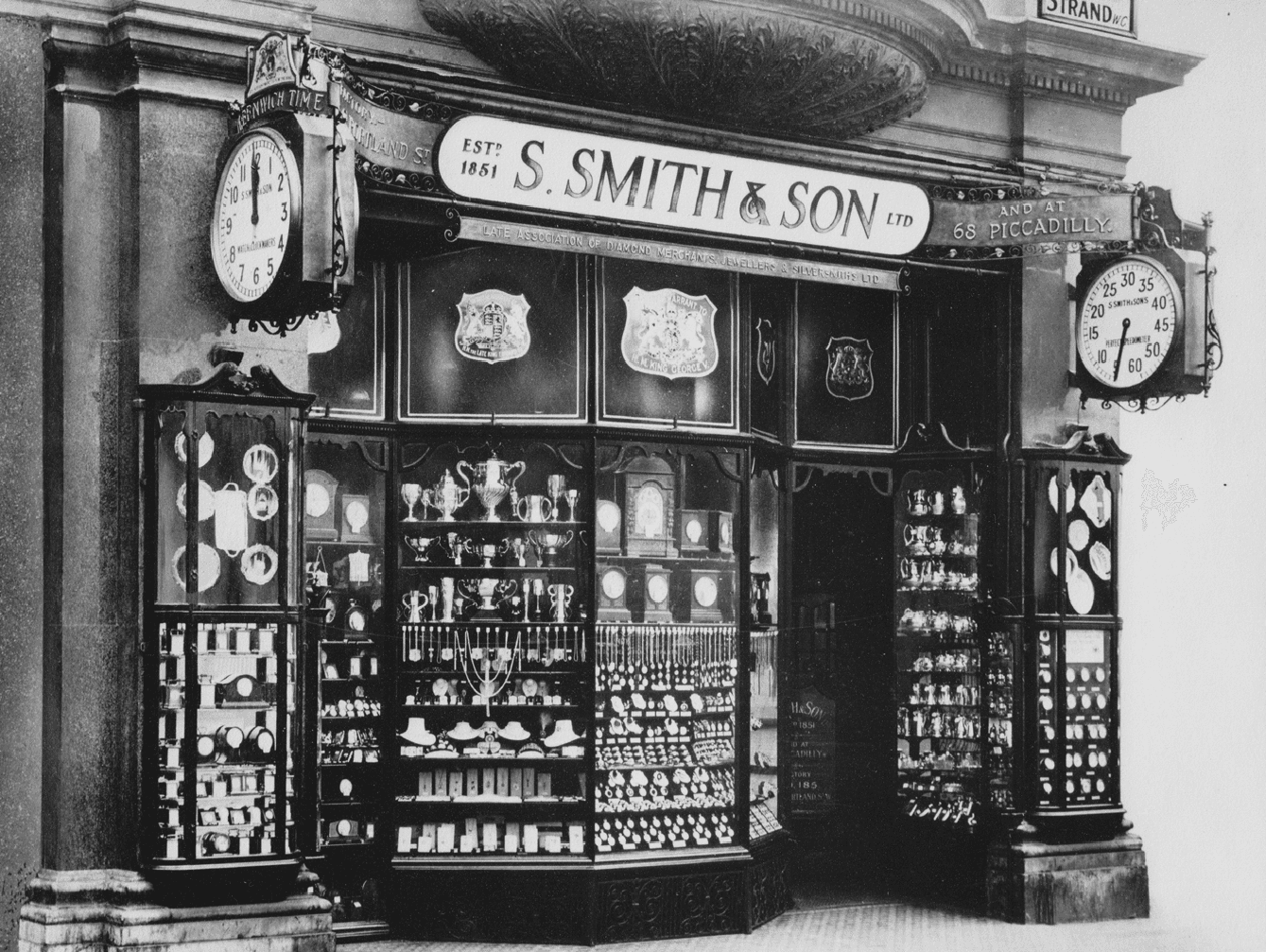
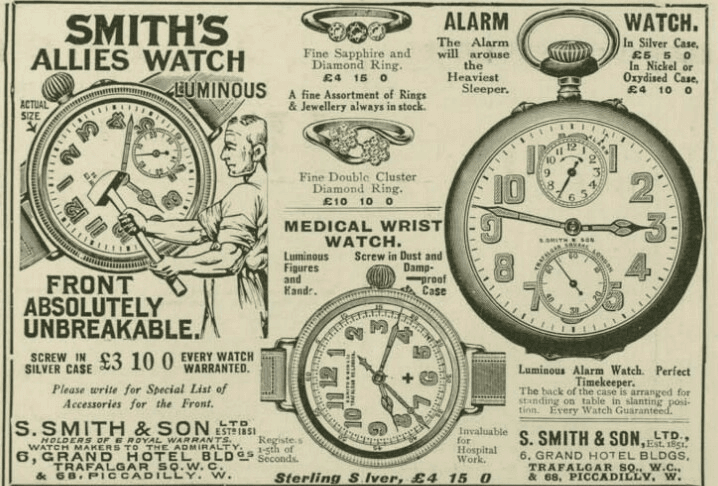
  • Sold by S. Smith & Son, Trafalgar Square, London
  • Case hallmarked 1915 · last service mark 11/16

1915

Purchased as a tool

A black dial and Borgel case made this a costly officer's instrument — bought because lives would depend on it.

1918–19

Damaged, then forgotten

A ding at 10 o'clock stopped the bezel from seating. Untouched for a century, the movement still held the fine dust of decades.

100+ yrs

Brought back to life

A horological time capsule — stripped, studied, and restored so a new generation can understand what a working medic's watch truly was.

Historic S. Smith & Son Ltd shopfront, Strand / Trafalgar Square, London
S. Smith & Son · Trafalgar Square
Period S. Smith & Son advertisement for a Medical Wrist Watch
“Invaluable for hospital work”
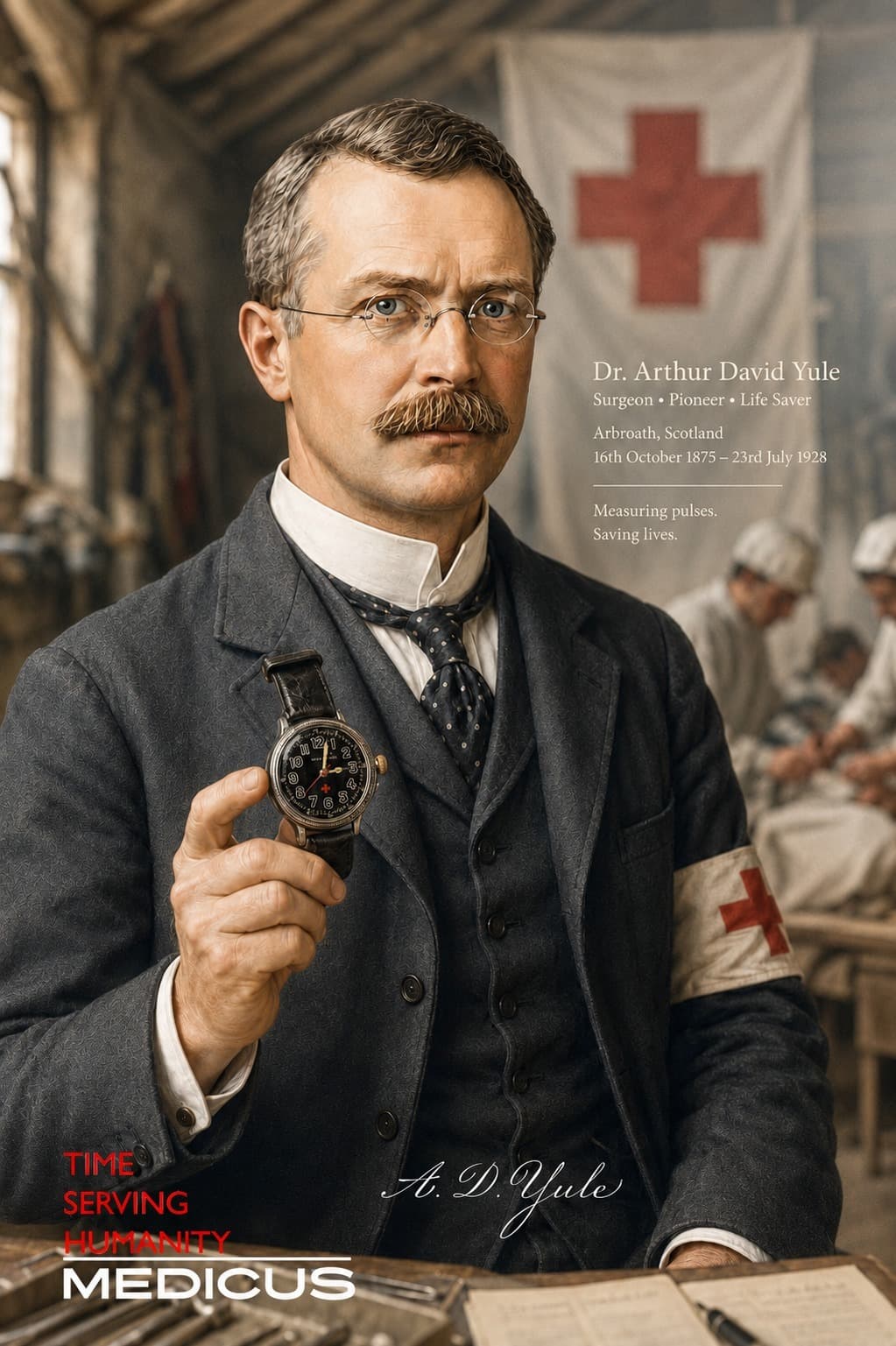
Artistic portrait of Dr. Arthur David Yule with the Medicus watch

Surgeon · Pioneer · Life Saver

Dr. Arthur David Yule

A. D. Yule

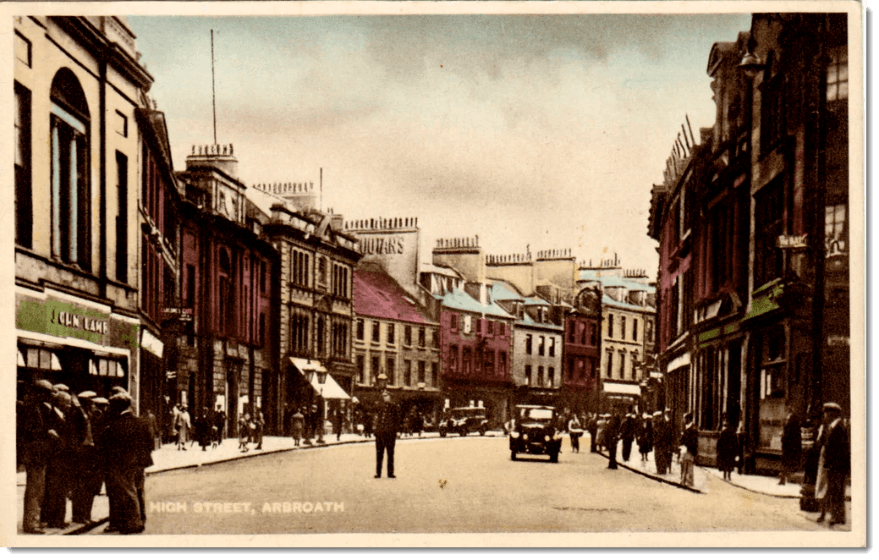
Arbroath, Scotland · 12 October 1875 – 23 July 1928

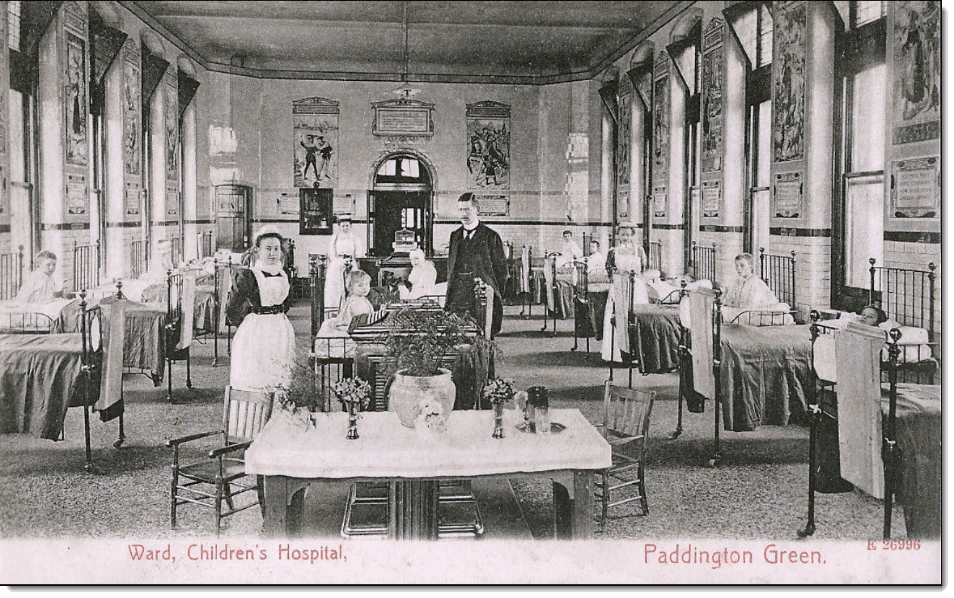
Medical Officer of Health for Arbroath. Graduate of Edinburgh and Dundee with over eleven first-class honours. House-surgeon at Leith Fever Hospital; resident physician at Paddington Green Children's Hospital, London — then home to practice, and to war.

Royal Army Medical Corps

Egypt, Palestine & Allenby

Lieutenant in 1916, Temporary Captain in 1917, Dr. Yule served under General Sir Edmund Allenby in Egypt and Palestine — through to the campaign's decisive victory in 1918. His father-in-law's In Memoriamremembered service “with great distinction,” and hints of injury sustained in the field.

A decade later he paid the ultimate price for that same unselfishness: on 23 July 1928 he died of smallpox while working to protect the townsfolk of Arbroath. A humanitarian to the very end.

“The truth of life is good works, which abide everlastingly.”
Historical portrait of Dr. Arthur David Yule
Provenance materials for A. D. Yule including watch engraving and service records

Places

From Paddington Green to Arbroath

Ward, Children's Hospital, Paddington Green — where Dr. Yule served as resident physician

London

Paddington Green Children's Hospital

Historic High Street, Arbroath — Dr. Yule's hometown and medical practice

Scotland

High Street, Arbroath

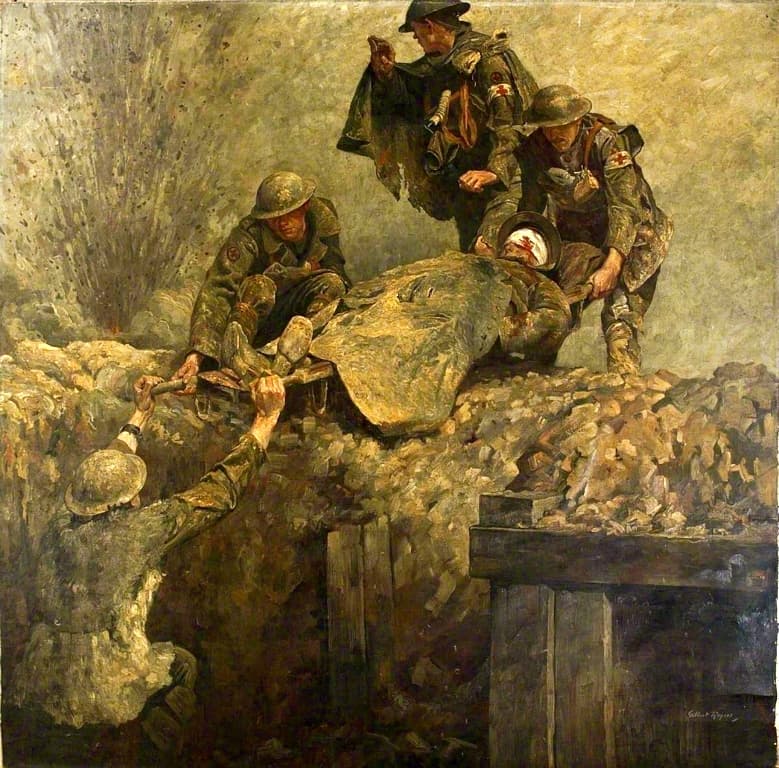
Gilbert Rogers painting of WW1 stretcher bearers of the Royal Army Medical Corps

Why remember

Unsung heroes of The Great War

Without the engraved watch, Dr. Yule might have remained another forgotten name. His constant companion through the business of saving lives now stands for the medics of the Royal Army Medical Corps and the Red Cross — those who served others at great personal risk.

“I kneel behind the soldier's trench… I bear the stretcher and I bend / O'er Fritz and Pierre and Jack to mend / What shells have torn.”

John Finley, RAMC · 1917

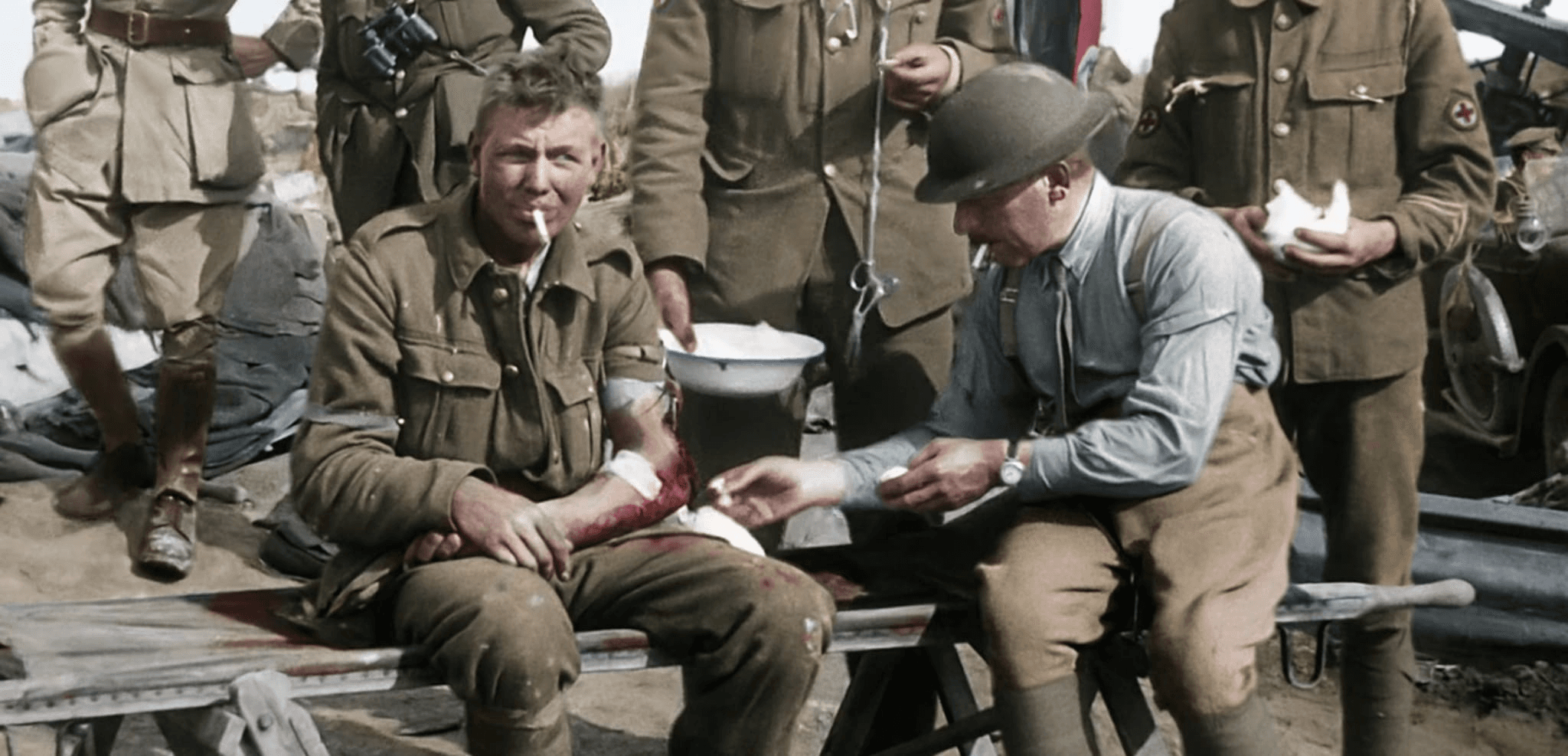
WW1 field dressing scene with a medic wearing a wristwatch

Seldom seen

Watches on the front line

Photographs of medics wearing wristwatches in WW1 are rare — these instruments were expensive beside ordinary trench watches, and few centre-seconds examples survived the conditions. Fewer still retain proven ownership.

This watch is the embodiment of what a well-used medic's watch looked like in the field: worn crown, black dial, Red Cross motif, and a seconds hand made for the pulse.

The Medicus Watch Company

Born on the Front Line

Heritage concepts inspired by the original 1915 instrument — London, New York, Geneva — honouring precision made for humanity.

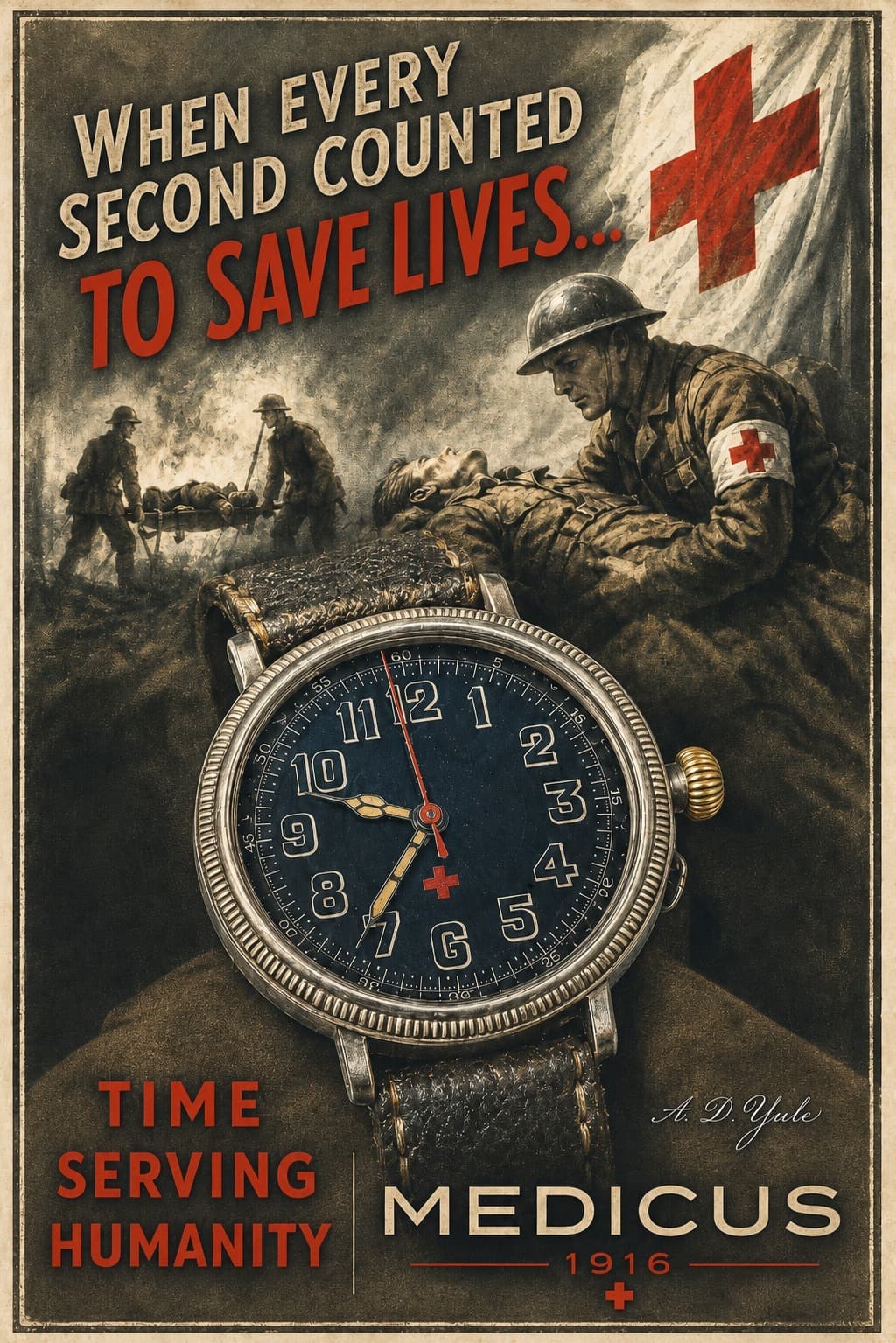
Medicus poster: medics on the battlefield when every second counted
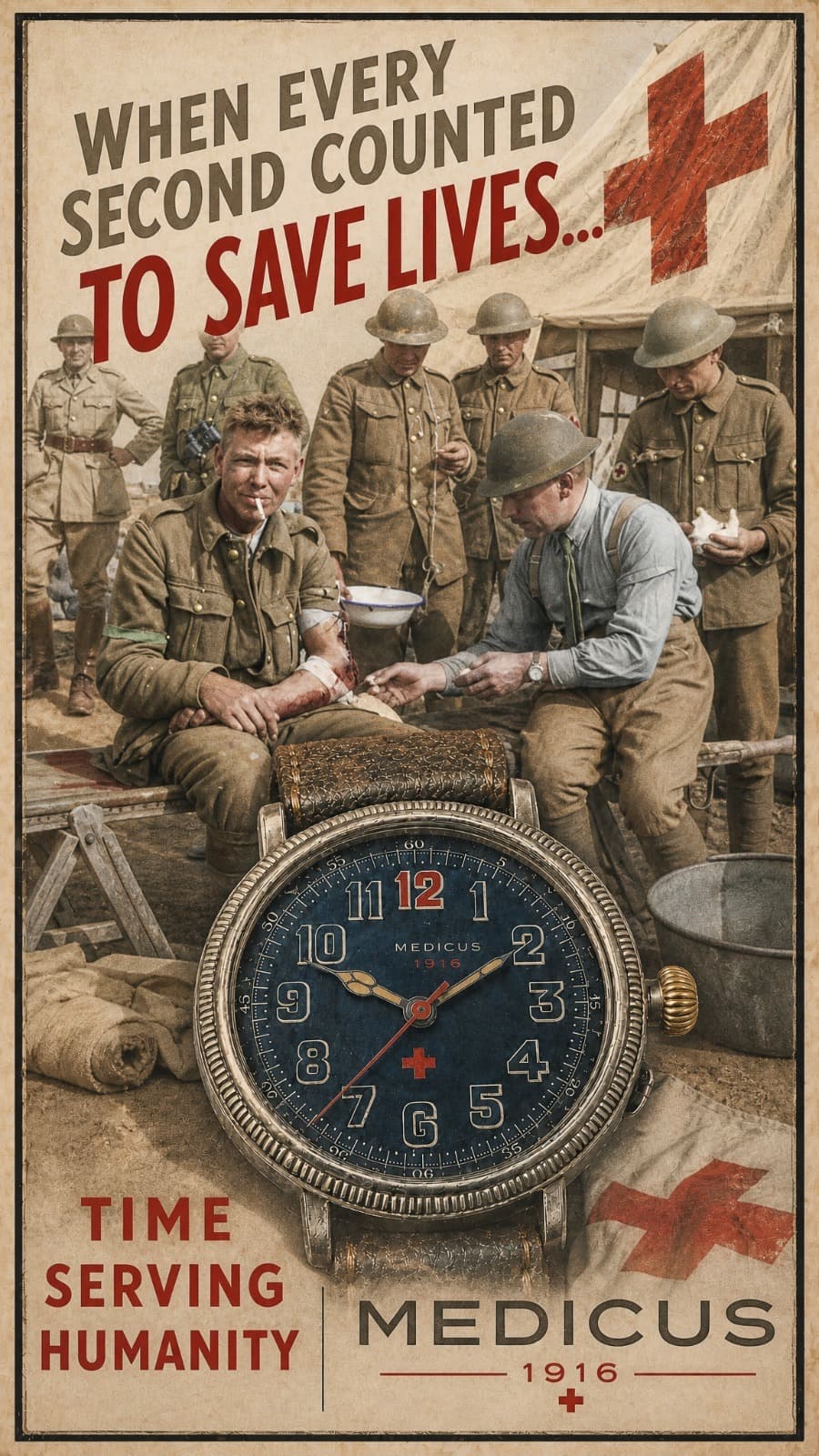
Medicus 1916 poster: field hospital scene with trench watch
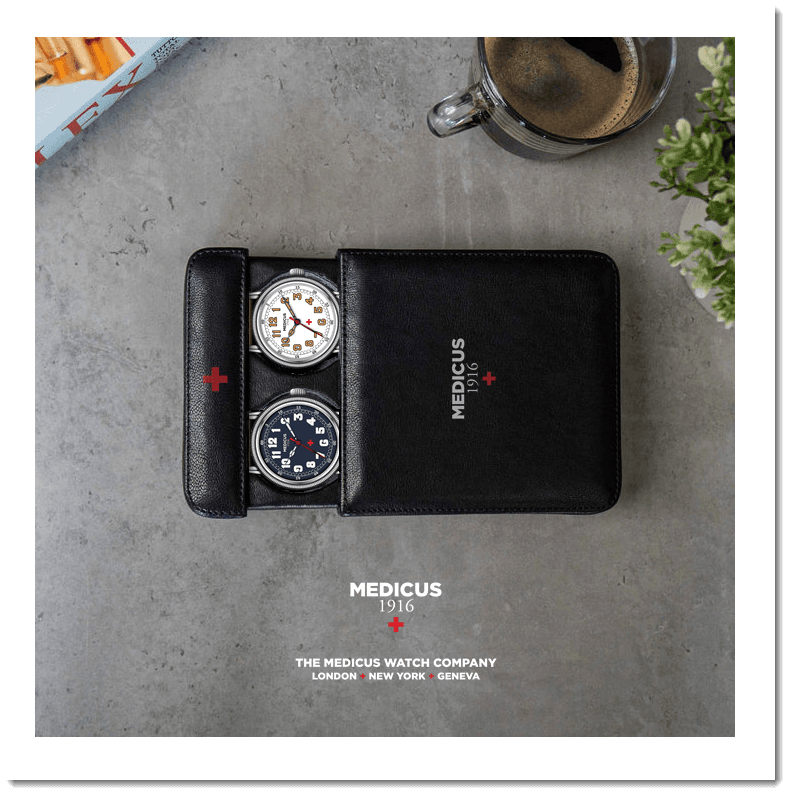
Medicus 1916 dual-watch presentation pouch branding concept

A. D. Yule

MEDICUS

Time Serving Humanity · 1916

One man's wristwatch. A generation of medics. A reminder that when every second counted to save lives, precision was an act of service.

Return to Top